
Certified True Copies in Ontario: Everything You Need to Know Before Certifying Your Documents
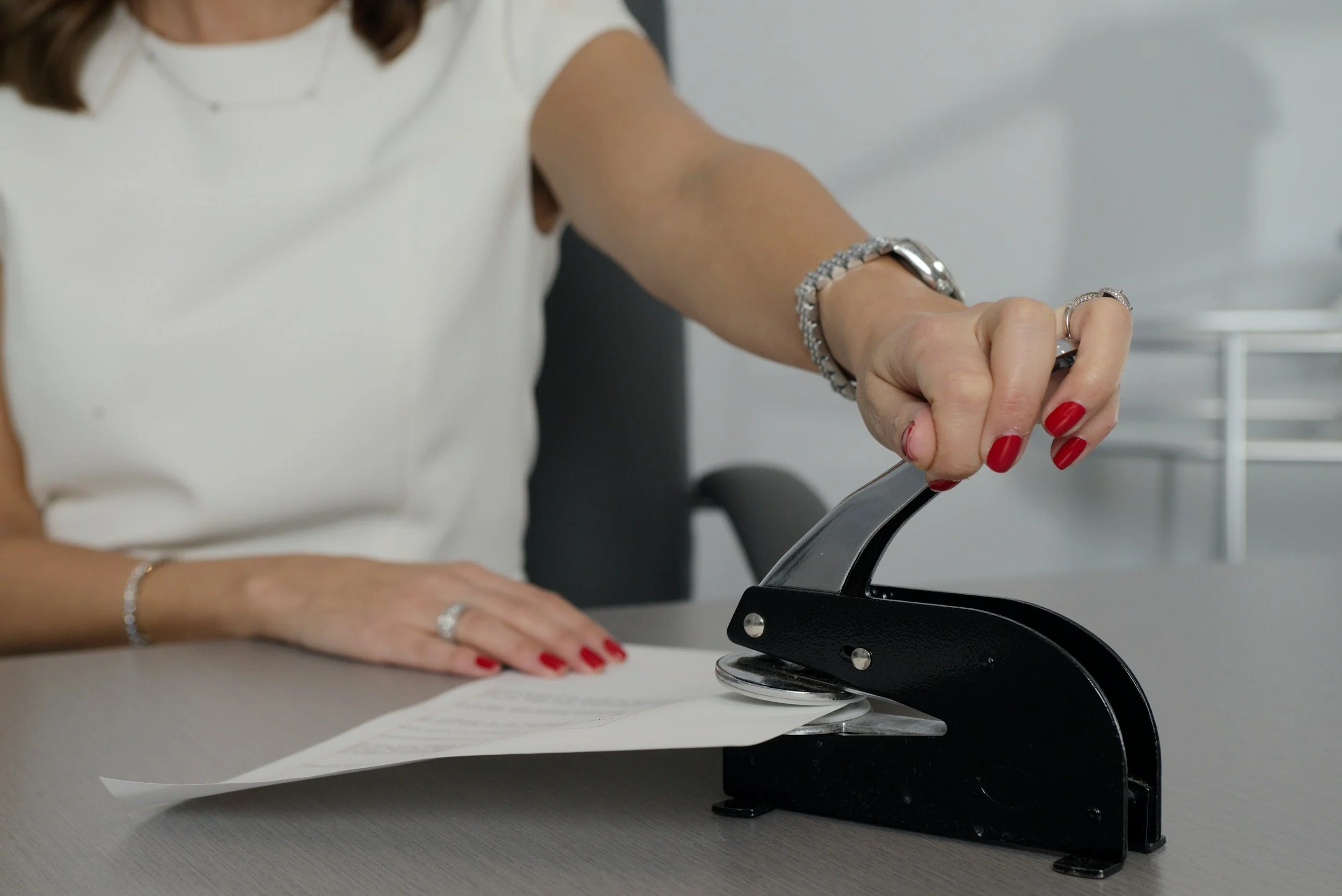
Table of Contents
What Is a Certified True Copy?
Why Certified True Copies Matter More Than You Think
When Do You Need a Certified True Copy?
Common Documents That Require Certified True Copies
Who Can Certify a True Copy in Ontario?
Certified True Copies vs. Notarized Documents: What's the Difference?
How the Certified True Copy Process Works
Common Mistakes That Cause Delays
How VENTI Legal Makes Certified True Copies Fast and Simple
Conclusion
FAQs
What Is a Certified True Copy?
When an organization asks for a certified true copy, they're asking for more than a photocopy. They want independent confirmation that the copy is an exact reproduction of the original document. It is a safeguard against fraud, altered documents, and administrative errors.
Many people assume they can simply photocopy a passport, birth certificate, diploma, or corporate document and submit it. Unfortunately, that assumption often leads to rejected applications, unnecessary delays, and additional costs. A certified true copy provides confidence to the receiving organization that the document they are reviewing accurately reflects the original.
Whether you're applying for Italian citizenship, opening a business overseas, submitting professional licensing documents, or completing government paperwork, certified true copies are commonly required throughout Ontario and internationally.
Understanding when you need one and who is authorized to certify it can save you significant time and frustration.
Why Certified True Copies Matter More Than You Think
Legal documents are built on trust. Governments, financial institutions, educational organizations, and foreign authorities rely on documentation to make important decisions. If they cannot verify the authenticity of a copy, they may refuse to process your application entirely.
That may sound like a small technicality, but it often creates much larger problems. Delayed immigration applications, postponed real estate transactions, interrupted business registrations, and licensing setbacks can all begin with improperly certified documents.
A certified true copy acts as an assurance that the document has been carefully reviewed against the original by an authorized professional. Rather than relying on the applicant's word alone, the receiving organization has confidence that the copy accurately reflects the original document.
This extra layer of verification is why certified true copies remain a common requirement across both domestic and international legal processes.

When Do You Need a Certified True Copy?
Many organizations prefer certified true copies because they allow you to keep your original documents while still providing authenticated copies for review.
Some of the most common situations include government applications, immigration matters, international legal proceedings, educational admissions, financial institutions, insurance claims, and corporate transactions.
Individuals pursuing Italian citizenship frequently require certified true copies of birth certificates, marriage certificates, death certificates, and other civil records before documents move through additional authentication or translation processes. Likewise, businesses often need certified copies of incorporation documents, shareholder resolutions, or corporate records when working with banks, regulators, or international partners.
The exact requirements vary depending on the organization requesting the documents. Before making copies, it is always worth confirming whether they require certified true copies, notarization, or another form of authentication.
Common Documents That Require Certified True Copies
Although requirements vary, these documents are frequently certified:
Personal Identification
Passports, driver's licences, permanent resident cards, citizenship certificates, and health cards are commonly requested when verifying identity.
Vital Statistics Documents
Birth certificates, marriage certificates, death certificates, divorce certificates, and name change certificates often require certification for immigration, citizenship, or international legal matters.
Educational Records
Diplomas, university degrees, college transcripts, certificates, and professional qualifications are regularly certified when applying for employment, licensing, or education abroad.
Corporate Documents
Businesses frequently require certified copies of Articles of Incorporation, corporate minute books, shareholder resolutions, partnership agreements, and business registrations when dealing with lenders, regulators, or foreign jurisdictions.
Legal Documents
Powers of Attorney, affidavits, court orders, wills, trusts, and various legal agreements may also require certified copies depending on the receiving authority.
While this list covers many common examples, every organization sets its own requirements. Verifying those requirements before your appointment helps ensure the certification meets the intended purpose.
Who Can Certify a True Copy in Ontario?
This is one of the most misunderstood aspects of the process.
Not every professional is legally authorized or accepted by every organization to certify true copies. The receiving institution determines who they will recognize as an acceptable certifying authority.
In Ontario, lawyers who are also Notaries Public commonly certify true copies for both domestic and international use. Their authority is widely recognized by government agencies, educational institutions, financial organizations, and foreign authorities.
Choosing an experienced legal professional also reduces the risk of technical errors. Something as simple as missing wording, incomplete certification language, or improper identification of the original document can result in the copy being rejected.
When dealing with international matters or time-sensitive applications, accuracy is just as important as speed.
Certified True Copies vs. Notarized Documents: What's the Difference?
Many people use these terms interchangeably, but they are not the same thing.
A certified true copy confirms that a photocopy is an exact and complete reproduction of the original document after the original has been examined by an authorized professional.
A notarized document, on the other hand, typically involves verifying the identity of the person signing a document, witnessing the signature, administering an oath, or authenticating the execution of the document itself.
The distinction matters because requesting the wrong service can delay your application. Some organizations specifically require certified true copies, while others require notarized signatures or sworn declarations.
Understanding exactly what the receiving organization requires before booking your appointment helps avoid unnecessary appointments, additional fees, and processing delays.

How the Certified True Copy Process Works
The process is straightforward when handled correctly.
You bring the original document together with the photocopy that needs certification. The original is carefully examined against the copy to verify that every page, signature, seal, and detail matches exactly.
Once confirmed, the certifying professional applies the appropriate certification wording, signature, and official seal where required. This confirms that the copy has been compared with the original and is considered a true and accurate reproduction.
The original document is then returned to you immediately, allowing you to keep your important records while submitting the certified copy to the requesting organization.
Common Mistakes That Cause Delays
Most delays aren't caused by the certification itself. They're caused before the appointment even begins.
One of the most common mistakes is assuming every photocopy requires certification. Some organizations accept ordinary copies, while others require notarization instead. Understanding the exact requirement can save unnecessary expense.
Another frequent issue is arriving without the original document. A certified true copy cannot be created from another photocopy, scanned image, or digital file. The original document must be available for comparison.
People also underestimate the importance of document quality. Poor photocopies, missing pages, cropped margins, or unreadable text can all result in certification being refused or the receiving organization rejecting the document later.
Taking a few extra minutes to prepare properly can prevent weeks of unnecessary delays.
How VENTI Legal Makes Certified True Copies Fast and Simple
When you need a certified true copy, speed matters. But speed without accuracy can create bigger problems than the delay you're trying to avoid. A document that isn't certified correctly may be rejected by the organization requesting it, forcing you to repeat the process and potentially delaying your application by days or even weeks.
At VENTI Legal, we believe legal services should remove obstacles, not create them. Our approach is straightforward. We carefully review your original document alongside the copy, confirm that every page is an exact reproduction, and complete the certification with the attention to detail these documents require. The goal is simple: provide certified true copies that meet the requirements of the receiving organization so you can move forward with confidence.
We also understand that many clients aren't entirely sure what they need when they book an appointment. Some require certified true copies. Others need a notarized signature, an affidavit, or a Commissioner of Oaths. Rather than leaving you to guess, we explain the difference before completing your documents. That guidance helps eliminate confusion and reduces the risk of submitting the wrong paperwork.
Our certified true copy services regularly support clients dealing with immigration matters, Italian citizenship applications, corporate transactions, educational institutions, financial organizations, and international legal processes. Every matter is different, but the objective remains the same: accurate documentation completed efficiently.
Legal paperwork is stressful enough without wondering whether your documents will be accepted. At VENTI Legal, we make the process clear, professional, and efficient from start to finish.
Why Choosing the Right Legal Professional Matters
A certified true copy might appear to be a simple administrative task, but the consequences of getting it wrong can be significant. Many applications involve strict deadlines, government agencies, foreign authorities, or financial institutions that expect documents to meet very specific requirements.
Working with an experienced legal professional provides more than just certification. It gives you confidence that your documents have been reviewed carefully and prepared with attention to detail. If questions arise about your documentation, you're working with a law firm that understands the legal processes behind the paperwork, not simply the paperwork itself.
For entrepreneurs, families, and professionals, that peace of mind is often just as valuable as the certification itself.
Conclusion
Certified true copies play an important role in protecting the integrity of legal, personal, and business documents. While they may seem like a small part of a larger application, they are often the foundation that allows government agencies, educational institutions, financial organizations, and international authorities to verify the authenticity of your records.
Understanding when you need a certified true copy, who can certify it, and how the process works can save valuable time while preventing unnecessary delays. Preparing your documents properly before submitting them helps ensure your application keeps moving instead of being sent back for corrections.
Whether you're preparing documents for Italian citizenship, corporate matters, immigration, education, or another legal process, having your certified true copies completed accurately the first time makes all the difference.
At VENTI Legal, we combine efficiency with careful attention to detail, helping individuals and businesses obtain certified true copies quickly, professionally, and with confidence.
📍 Serving: Toronto | Mississauga | Vaughan | Hamilton | Ottawa | Across Ontario
Toronto Office
2150 Islington Avenue
Etobicoke, ON M9P 3V4
Vaughan Office
8400 Jane Street
Vaughan, ON L4K 4L8
Woodbridge Office
159 Woodbridge Avenue
Woodbridge, ON L4L 4K9
📞 289 500 9777
🌐 www.ventilegal.com
📩 Online inquiries answered promptly
VENTI Legal Services
This isn't law. This is leverage.
FAQs
-
A certified true copy is a photocopy of an original document that has been compared against the original by an authorized professional and certified as a true and complete reproduction.
-
Common examples include passports, driver's licences, birth certificates, marriage certificates, university diplomas, corporate records, powers of attorney, and other legal or identification documents. Requirements vary depending on the organization requesting the documents.
-
No. A certified true copy confirms the accuracy of a photocopy, while notarization generally involves verifying a person's identity, witnessing signatures, administering oaths, or authenticating legal documents.
-
Yes. The original document must be presented so it can be compared against the photocopy. A certified true copy cannot be created using another photocopy or a digital image alone.
-
In most cases, certified true copies can be completed during your appointment, provided you have the original document and any required copies available.
